
The History of Dangerous Goods Regulation in the UK
Dangerous goods have been transported throughout the United Kingdom for centuries. From gunpowder and explosives in the Victorian era to today’s lithium batteries, industrial chemicals and radioactive materials, the need to move hazardous substances safely has driven the development of increasingly sophisticated regulations.
The origins of dangerous goods regulation in the UK can be traced back to the rapid industrialisation of the 19th century. Britain’s expanding railways, canals and ports enabled the movement of unprecedented quantities of explosives, fuels and chemicals, but safety standards often struggled to keep pace.
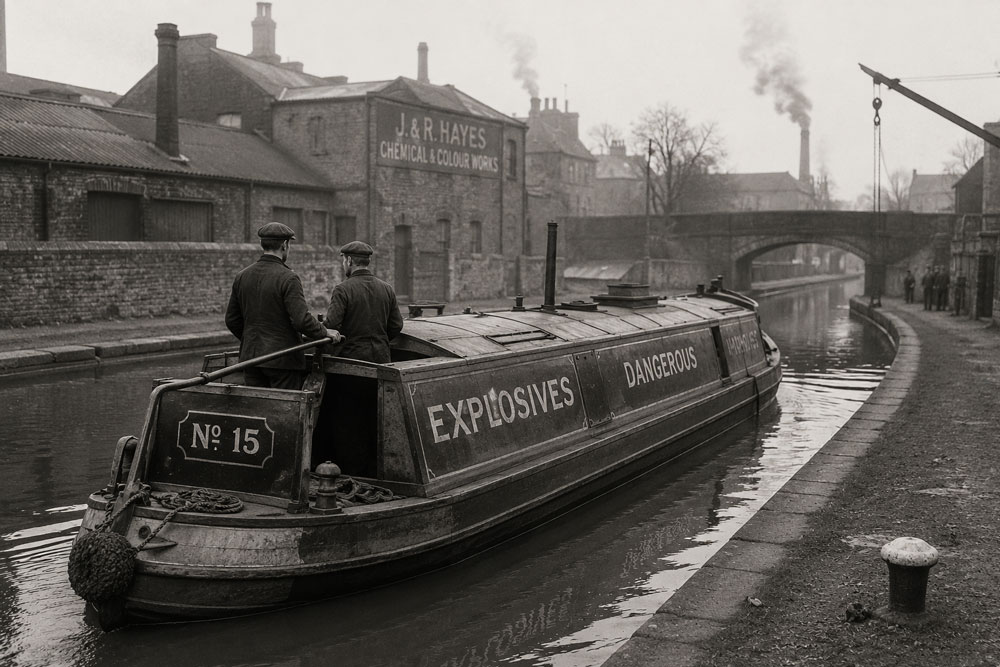
One of the earliest legislative milestones was the Gunpowder Act 1860, which introduced controls over the manufacture, storage and transportation of explosives. As the industrial economy grew, accidents involving hazardous materials became more common. In 1874, a canal boat carrying gunpowder exploded in Birmingham, causing extensive damage and loss of life. Similar incidents at docks, warehouses and railway depots highlighted the need for greater oversight of dangerous substances in transit.
By the early 20th century, regulation had expanded beyond explosives to include petroleum products, corrosive chemicals and compressed gases. However, requirements varied between countries, creating challenges for international trade and transport.
A major turning point came after the Second World War. In 1956, the United Nations established the Committee of Experts on the Transport of Dangerous Goods with the goal of creating a harmonised system that could be applied internationally. The following year, the committee published the first edition of the UN Recommendations on the Transport of Dangerous Goods, commonly known as the “Orange Book”.
The UN Recommendations transformed the way dangerous goods were identified and transported. Perhaps the most significant innovation was the introduction of UN Numbers—four-digit identification codes assigned to hazardous substances and articles. These numbers created a common language for shippers, carriers, regulators and emergency responders worldwide.
Today, thousands of substances are assigned UN Numbers. Examples include petrol (UN 1203), sulphuric acid (UN 1830), diesel fuel (UN 1202) and lithium-ion batteries (UN 3480). Regardless of language or country, these identifiers allow dangerous goods to be quickly recognised and handled appropriately.
The UN system also introduced a standard classification framework based on nine hazard classes, ranging from explosives and gases to toxic, corrosive and radioactive materials. Alongside classification came requirements for packaging, labelling, documentation and vehicle placarding that remain familiar to dangerous goods professionals today.
As international trade expanded, the UN Recommendations became the foundation for modal regulations worldwide. In Europe, this led to the development of ADR (road transport), RID (rail transport) and ADN (inland waterways), while the International Maritime Dangerous Goods (IMDG) Code and the ICAO Technical Instructions for air transport adopted the same UN principles.
The UK progressively incorporated these standards into domestic law. One of the most significant developments was the introduction of the Carriage of Dangerous Goods and Use of Transportable Pressure Equipment Regulations 2009, commonly known as CDG 2009. These regulations consolidated and modernised existing legislation, implementing European requirements while providing the legal framework for the carriage of dangerous goods by road and rail within Great Britain.
Although ADR is an international agreement, its requirements are given legal effect in Great Britain through the CDG Regulations. This means that many of the rules familiar to transport operators—including vehicle equipment standards, driver training requirements, dangerous goods documentation, packaging provisions and emergency procedures—ultimately trace their origins back to the UN Recommendations first developed more than 60 years ago.
Today, dangerous goods transport in the UK is governed by a combination of domestic legislation and international agreements. While the substances being transported have changed dramatically since the Victorian era, the fundamental objective remains the same: protecting people, property and the environment from the risks associated with hazardous materials.
From the Gunpowder Act of 1860 to the globally recognised UN Number system and modern ADR requirements, the history of dangerous goods regulation in the UK reflects more than 160 years of learning, adaptation and international cooperation. It is a history shaped not only by legislation, but by the lessons learned from incidents that demonstrated the importance of transporting dangerous goods safely.
Evolution Forwarding specialises in dangerous goods movements, by air, ocean and road. We provide complete solutions for packing, documentation, compliance and training for dangerous goods products. For further information please email info@evolutionforwarding.com or call 0800 4346244.