
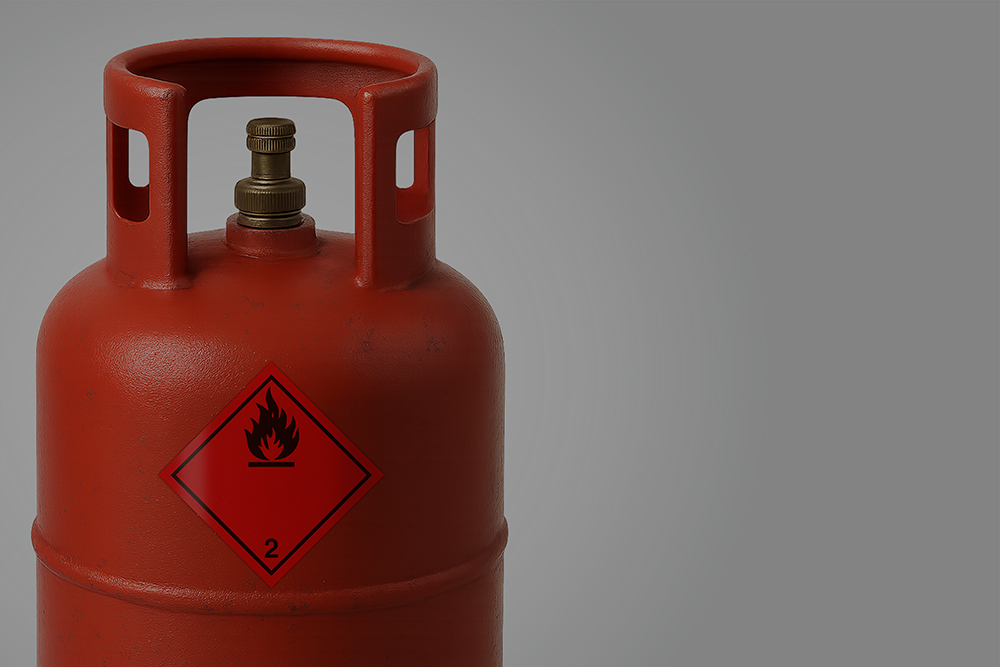
TT Club’s Quick Reference Guide For Handling Gases
We have been covering some of the TT Club’s new quick-reference guides on the safe handling of dangerous goods, as a continuation of that series we are now highlighting their key practices to follow – and avoid – when dealing with Gases – or Class 2 dangerous goods.
Recognised globally, TT Club is a leading insurer and risk management specialist serving the international transport and logistics sector.
Class 2 cargoes include flammable gases which can ignite when mixed with air or intensify an existing fire and are often sensitive to temperature changes. Furthermore, non-flammable, non-toxic gases while not combustible, may pose serious risks by causing asphyxiation or suffocation if released, may contribute to fire through oxidation, and can explode if subjected to high pressure.
Gases are divided into three divisions:
- 2.1 Flammable Gases: Ignite in air or contribute to fire; sensitive to temperature changes.
Examples: Acetylene, butane, propane, LPG, hydrogen, aerosols. - 2.2 Non-Flammable, Non-Toxic Gases: Can cause asphyxiation, oxidization, or explode under pressure.
Examples: Carbon dioxide, helium, nitrogen, oxygen, argon. - 2.3 Toxic Gases: Harmful or fatal if inhaled.
Examples: Chlorine, fluorine, methyl bromide, hydrogen fluoride, sulphur dioxide.
TT Club Do’s and Dont’s
Packing
Do…
- Use gas tanks or cylinders consistent with manufacturer’s instructions
Don’t…
- Use damaged tanks or cylinders
- Pack a different gas in tank or cylinder without cleaning it as per manufacturer’s recommendations
- Overfill tanks or cylinders
- Repackage Class 2 cargoes without specialist advice
Storing
Do…
- Do…
- Store in well-ventilated and, where required, temperature-controlled storage facilities
- Store with labels forward, heavy cargoes at bottom, and correct orientation (arrows up)
- Inspect stored cargo regularly to ensure condition remains stable and safe
- Alert the designated dangerous goods competent person if any problems, such as a suspected leak
- Ensure all employees involved in storing are trained in emergency response procedures
Don’t…
- Store near sources of heat, such as a radiator
- Store without suitable leak detectors
- Store old or uncollected cargoes, which can become unstable over time
Transporting
Do…
- Ensure good ventilation during transport, such as in open trailers or containers
- Ensure all staff involved in transport have the relevant dangerous goods awareness training
- Contact the designated dangerous goods competent person if you have any questions or queries about transport
- Pack tanks and cylinders tightly and securely to avoid movement during transport
- Familiarise yourself with and adhere to the relevant chapters of the CTU Code
Don’t…
- Allow any ignition sources near Division 2.1 cargoes during transport
- Transport Division 2.1 and 2.3 cargoes if classed as ‘high consequence’ without a security plan in place
- Transport Class 2 cargoes with any other cargoes that may react with them
Always
- Ensure Class 2 cargoes are stored under relevant temperature requirements
- Communicate clearly with the entire supply chain
- Maintain a documented emergency response plan that is regularly tested and, ideally, developed in collaboration with the cargo manufacturer
Never
- Throw, drop, roll, slide or drag Class 2 cargoes at any point in the supply chain
- Ignore abandoned cargo – it must be safely removed and disposed of
Evolution Forwarding provide customers with compliant solutions for dangerous goods, specialising in end-to-end solutions for the safe and transport of these product types by air, sea, and road.
From packaging and documentation to regulatory compliance and staff training, our expertise helps shippers navigate these challenges with confidence. Contact us at info@evolutionforwarding.com or call 0800 4346244 to learn more.