
TT Club’s Quick Reference Guide For Explosive Substances And Articles
We have been covering some of the TT Club’s new quick-reference guides on the safe handling of dangerous goods, as a continuation of that series we are now highlighting their key practices to follow – and avoid – when dealing with Explosive Substances And Articles, or class 1 dangerous goods.
Recognised globally, TT Club is a leading insurer and risk management specialist serving the international transport and logistics sector.
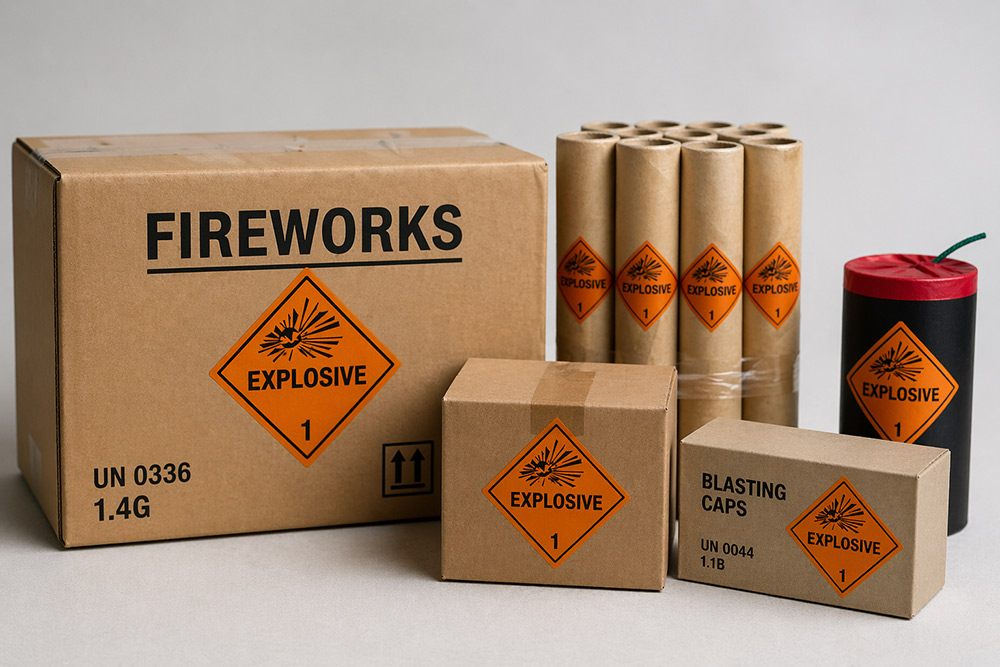
Class 1 dangerous goods include explosive substances and articles that pose risks such as property damage, cargo damage, injury, environmental harm, insurance invalidation, and potential criminal prosecution.
Explosives are divided into six divisions under ADR guidelines::
- 1.1: Mass explosion hazard (e.g., TNT, dynamite, RDX).
- 1.2: Projection hazard without mass explosion (e.g., large fireworks, munitions).
- 1.3: Fire hazard with minor blast/projection hazard (e.g., rocket propellant).
- 1.4: No significant hazard (e.g., consumer fireworks, airbags).
- 1.5: Very insensitive substances with mass explosion hazard (e.g., blasting agents).
- 1.6: Extremely insensitive articles with no mass explosion hazard.
TT Club Do’s and Dont’s
Packing
Do…
- The correct packaging is important as it can affect classification
- Use protective packaging for Class 1 cargoes activated by electromagnetic radiation
- Use watertight packaging for soluble explosives
- Use metal packaging with a suitable coating or liner for loose metal explosives
Don’t…
- Use plastic packaging that might generate static electrical charges
- Use packaging that creates internal pressure
- Repackage Class 1 cargoes without specialist advice
Storing
Do…
- Store Class 1 cargoes in a way that minimises the risk to life, property and other cargo
- Assess, establish and follow documented procedures
Don’t…
- Store items which are incompatible with Class 1 cargoes in the same place
- Store near to stairways and emergency exits
Transporting
Do…
- Ensure suitable security arrangements are in place at every stage of transport
- Ensure everyone involved in transport has relevant dangerous goods awareness training
- Contact the designated dangerous goods competent person if you have any questions about transport
- Familiarise yourself with and adhere to the relevant chapters of the CTU Code
Don’t…
- Transport ‘high consequence’ cargoes without considering security provisions
- Transport military equipment with its means of explosion enabled
- Transport Class 1 cargoes with other cargoes that may react with them
Always
- Conduct thorough due diligence of customers and contractors
- Communicate clearly with the entire supply chain
- Maintain a documented emergency response plan that is regularly tested and, ideally, developed in collaboration with the cargo manufacturer
Never
- Throw, drop, roll, slide or drag Class 1 cargoes at any point in the supply chain
- Lift other cargoes over Class 1 cargoes
- Handle or load Class 1 cargoes in adverse weather conditions
- Disclose the presence of Class 1 cargoes beyond the personnel who need to know
- Ignore abandoned cargo – it must be safely removed and disposed of
Evolution Forwarding provide customers with compliant solutions for dangerous goods, specialising in end-to-end solutions for the safe and transport of these product types by air, sea, and road.
From packaging and documentation to regulatory compliance and staff training, our expertise helps shippers navigate these challenges with confidence. Contact us at info@evolutionforwarding.com or call 0800 4346244 to learn more.