
10 Reasons Why Dangerous Goods Are Rejected
Following numerous serious incidents in the movement of dangerous goods during recent times, carriers and authorities continue to clamp down on the requirements and regulations for moving them.
It’s not uncommon to witness dangerous goods shipments being delayed due to being rejected by an airline, steamship line or ferry operator. Below are ten reasons that this may happen.
- Documentation
Incomplete or incorrect shipping documents, such as the shipper’s declaration, can lead to shipment rejection. Properly completing documentation is vital, especially for ground transport where no set format exists, leading to potential compliance issues. Packaging
Using inadequate packaging that does not meet regulatory standards can lead to hazardous materials being improperly contained, risking leaks, spills, or accidents. Proper packaging, including UN performance packaging, is essential to prevent such incidents during transportation.Labeling and Marking
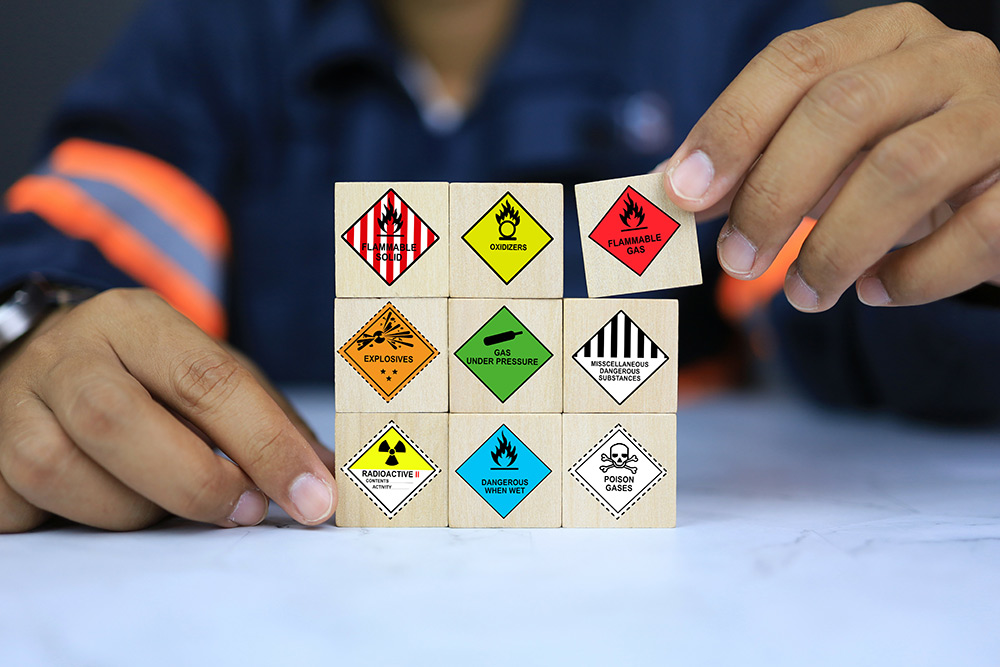
Failing to correctly label hazardous materials can result in shipment rejection. This includes using incorrect or missing hazard labels, wrong UN numbers, and non-compliant markings, which are crucial for safe and legal transport.Regulations
Not adhering to regulations like IATA, IMDG, or ADR can cause rejections. Compliance with these regulations ensures safety and legality in shipping hazardous materials across different transport modes, and failure to follow them may lead to penalties.- Segregation
Hazardous materials must be separated according to their hazard class to avoid dangerous reactions. Failure to properly segregate incompatible materials can lead to rejection, as improper handling increases the risk during transport. Quantity Limits
Exceeding the allowed hazardous material quantities can cause rejection, especially when the limits vary by transportation mode (air vs. ground). Understanding these specific regulations is key to preventing shipment issues, particularly for international shipments.Non-compliant Training
Personnel handling hazardous materials must be properly trained and up-to-date with certification. Expired or inadequate training can result in rejection and fines from regulatory agencies, making it essential to ensure training meets federal standards.Emergency Response Information
Emergency response information is essential for dangerous goods shipments. For all movements, you must include safety data sheets or emergency response guide numbers.Damages
If hazardous materials are found in damaged packaging, the shipment can be rejected for safety reasons. Ensuring the integrity of the packaging prevents leakage and protects everyone involved during transportation.Use of Exemptions
Misapplying regulatory exemptions, such as limited or excepted quantities, can result in rejection. Each mode of transport has different exemption limits, and incorrect application can cause delays and non-compliance, especially for air shipments.
Evolution Forwarding specialises in the safe and compliant transport of dangerous goods by air, sea, and road. Our end-to-end solutions cover everything from packaging and documentation to regulatory compliance and staff training. To learn more about our services, contact us at info@evolutionforwarding.com or call 0800 4346244.